Uranium
GI Reluctant but Successful Pioneer in Uranium Removal
By Steve White, Grand Island Bureau Chief / Nebraska.TV
"We like to spend money like we like to see squirrels in transformers."
Who says utilities administrators like Tim Luchsinger have no sense of humor?
And as much as the guys at the power plant hate seeing a critter cause a power outage, they don't like spending millions to solve problems no one's complaining about. In this case, the problem is uranium in Grand Island's water.
Keowee Bay HOA - Salem, South Carolina
Installation report on the Z-92® Uranium Removal from Keowee Bay HOA in Salem, SC.
Lawrenceville, Georgia
Installation report on the Z-92® Uranium Removal from the City of Lawrenceville, GA.
Grand Island, Nebraska
Installation report on the Z-92® Uranium Removal from the City of Grand Island, NE.
Uranium Removal Facility Now Operational
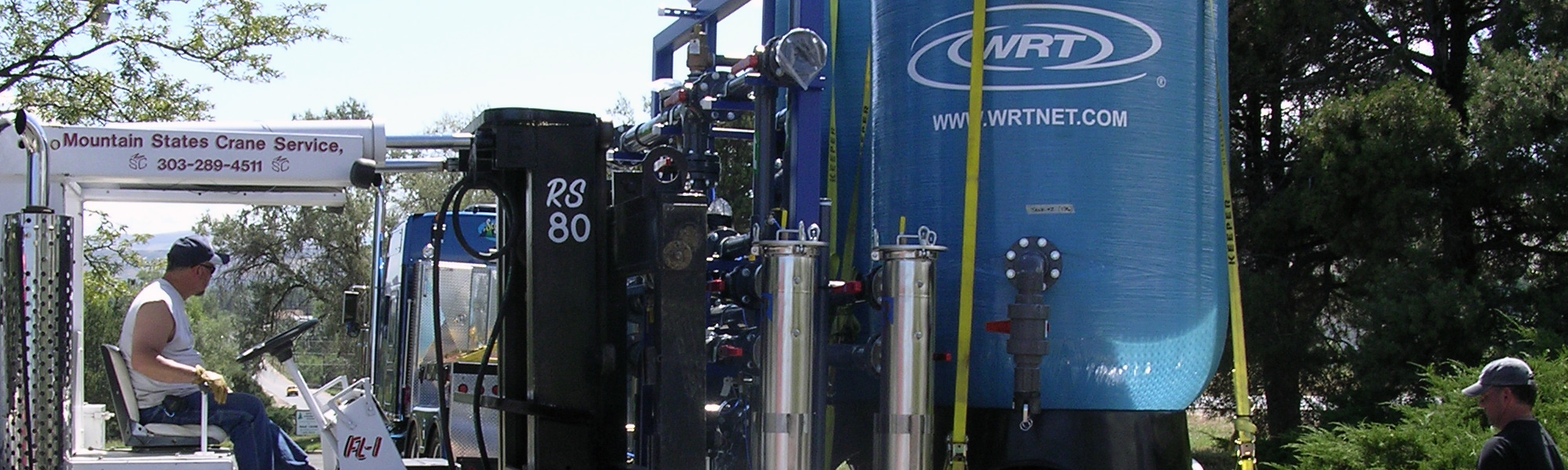
Grand Island’s $3 million uranium removal facility started running about one week ago.
The facility is expected to remove about 300 pounds of naturally occurring uranium every year from the city’s municipal water supply. That water is pumped by 21 city wells located along the Platte River.
First Look at Grand Island's New Uranium Treatment System
An explanation of Grand Island's new $3 million water uranium treatment system sound surprisingly simple.
"The water flows through the bottom and flows upwards and kind of suspends this bed of resin and the water's treated and out it goes," explains GI Utilities Director Tim Luchsinger during a tour of the new facility.
Grand Island, NE Utilizes New Water Treatment System to Reduce Uranium Levels
Rising uranium levels in Grand Island's water supply have led the city to utilize a new water treatment system.
The Utilities Department regularly monitors its water sources for compliance with the Environmental Protection Agency and State Health Department regulations.
Radionuclide System Cost Evaluation
Radium or Uranium Removal System Cost Evaluation
Z-XM™ Nitrate Treatment System
WRT’s nitrate removal system consists of utilizing a regenerable ion exchange media. Currently the media, trade named Z-XM™ is a nitrate selective synthetic ion exchange flow-through media. The media is a specialized strong base anion exchange resin of styrene-divinylbenzene base structure. The media is contained in a screened pressure vessel wherein untreated water is pumped down flow packed bed through the vessel for the service period. Following the recommended service interval measured in volume throughput, the pressure vessel is placed in a batch regeneration mode. Regeneration consists of contact with a calculated volume of concentrated sodium chloride brine for a specified time period. After a brief rinse period, the vessel is placed back into service. Waste brine containing nitrate contaminant is either collected for disposal or directed to a suitable wastewater discharge hub/sewer.
Z-XM™ Perchlorate Treatment System
WRT’s perchlorate removal system consists of utilizing a non-regenerable ion exchange media, which after exhaustion is disposed of via incineration (preferred) or suitable landfill disposal. Currently the media, trade named Z-XM™ is a perchlorate selective synthetic ion exchange flow-through packed bed downflow media. The media is a specialized strong base anion exchange resin of styrene-divinylbenzene base structure. The media is contained in a screened pressure vessel wherein untreated water is pumped through the vessel for the service period. Following the recommended service interval measured in bed volume (BV) throughput or based on treated water discharge sampling, the spent media is removed or exchanged and disposed of via incineration (change of title is completed). The media is replaced with fresh media and the system is put back into service.